

Why is the opportunity to learn in a group and in a new environment so important for an adult’s personal and professional development?
At first glance, it may seem that choosing a new direction simply requires gathering information, exploring labour market opportunities, assessing one’s skills and making a plan. But real life is a little more complicated. Every adult already has considerable experience, established ways of making decisions, beliefs about their own abilities and limitations they may not even be aware of.
That is why, in our “Career Awareness 3.0” programme, we focus not only on professional competences but also on the person behind them: their values, interests, resources, ways of interacting with others and ability to recognise their own needs.
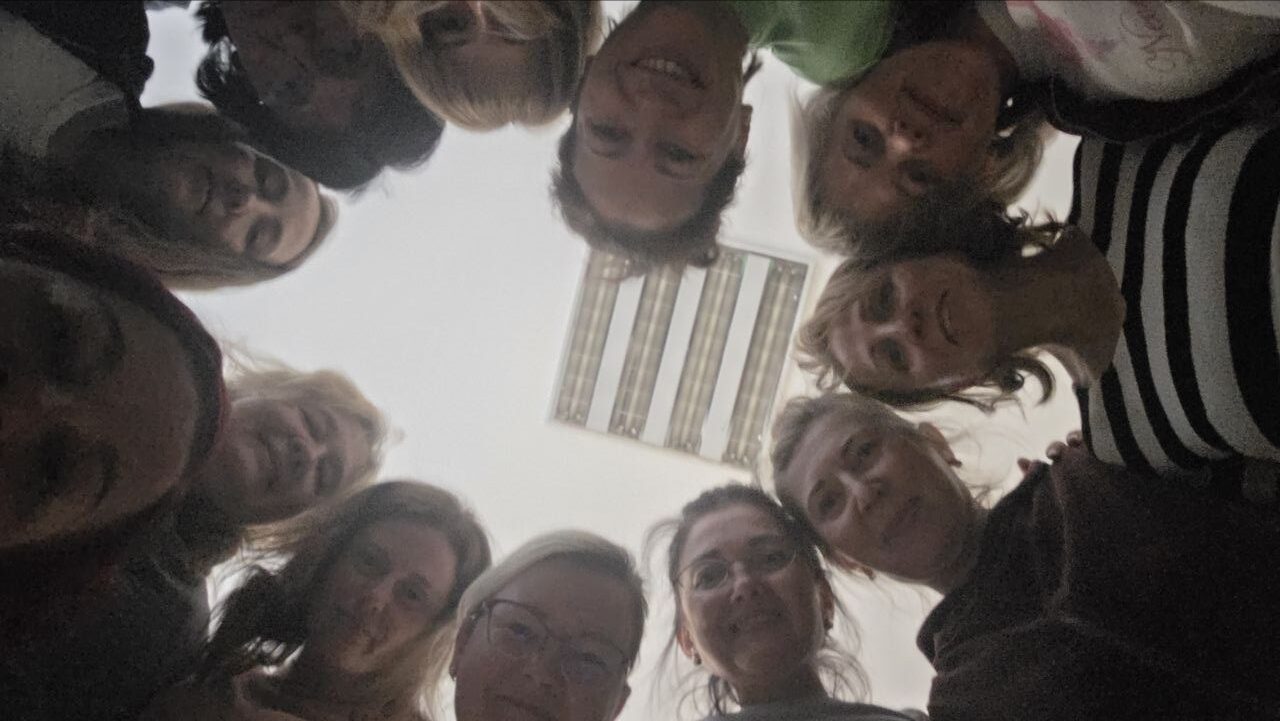
During the educational mobility in Jūrmala, participants explore their goals and possible development paths through individual exercises, metaphorical methods, group work and reflection. An important part of this process is the opportunity to look at their situation not only from a familiar perspective but also from a different angle.
For example, the desire to control everything and manage independently may have long been perceived as a strength. Yet during the learning process, a person may discover that this same habit limits their ability to cooperate, accept support and develop new projects. Similarly, what once seemed to be the only suitable career direction may, on closer examination, turn out not to fully reflect their personal wishes.
In such cases, the outcome is not a ready-made solution offered by the trainer, but a discovery made by the participant herself.
Why Learn in a Group?
In individual work, people explore their situations primarily through their own perceptions. A group offers an additional resource: other people’s experiences, different perspectives, new questions and the opportunity to observe oneself in interaction with others.
During one exercise, participants discovered how differently people can perceive the very same image. Even a familiar metaphorical card revealed unexpected details. It was a valuable illustration of how, in everyday life, we may overlook opportunities simply because we are accustomed to viewing a situation in a particular way.
However, group learning does not mean that others should make decisions for the participant. On the contrary, the trainer’s role is to create a safe environment in which everyone can explore their own questions, hear different opinions and independently decide what is right for them.
Why Is Learning Mobility Important?
Learning in another country allows adults to temporarily step outside their familiar surroundings and everyday roles. A new environment, communication with others, shared activities and mindful walks create additional opportunities for self-observation.
Participants begin to notice how they respond to unfamiliar situations, what helps them feel more confident, how easily they ask for support, whether they can express their own preferences and what opportunities emerge through interaction with others.
In our programme, these observations become part of the educational process. Participants not only acquire new knowledge but also learn to apply it in real-life situations.
How Can Learning Outcomes Be Sustained After Returning Home?
One of the organiser’s important responsibilities is to ensure that educational mobility does not remain an isolated, memorable experience. We therefore encourage participants to continue independent reflection, observe their decisions, practise mindful walking and gradually transfer new skills into everyday life.
It is equally important to recognise that change takes time. Participants return home with new experiences, but the people around them have not gone through the same learning process. For this reason, we emphasise the gradual introduction of new decisions, with respect for both oneself and one’s loved ones.
Learning mobility can become a starting point for new personal and professional choices. Not because a person must completely change their life within a few days, but because they have an opportunity to understand themselves better, recognise their own resources and identify a direction in which they genuinely want to develop.
This is what matters to us at Novucenter: helping adults not only acquire knowledge but also discover ways to use it to create the life they choose for themselves.
Trainers are Svetlana Smirnova and Olga Volkova
The programme is implemented under the Erasmus+ accreditation in the field of adult education and is co-funded by the European Union.
Project No. 2026-1-EE01-KA121-ADU-000418366.
