
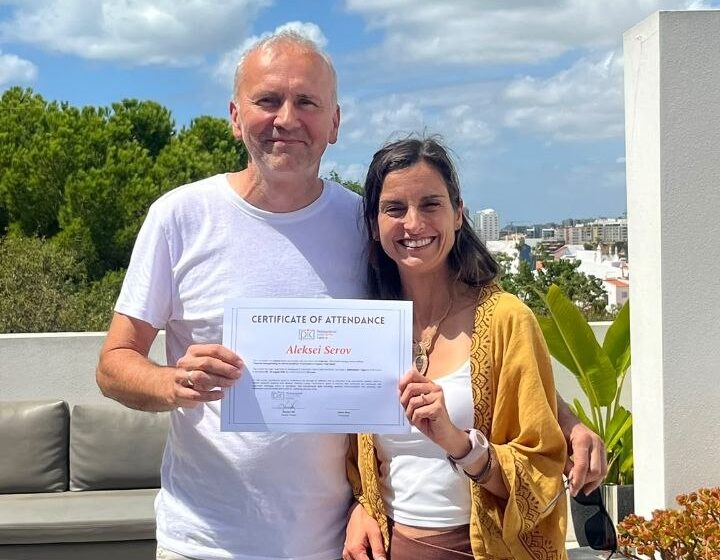
During my Erasmus+ mobility in Portugal, I took part in a course that made me look at a very practical question: what helps us cope with stress and remain effective when we face difficulties?
The programme was built around several connected topics: stress and emotional regulation, emotional awareness, communication and boundaries, as well as personal and team resilience. But what I especially appreciated was that we did not only discuss these topics theoretically. We tested different tools on ourselves.
I analysed my own stressors, created a personal resilience map, worked with different coping strategies and relaxation techniques. We explored emotional self-awareness and positive reframing: how the way we look at a difficult situation can influence our response to it.
Another important part of the course was communication. Through role-play and group exercises, we practised assertive communication, difficult conversations and setting healthy boundaries. We also looked at our professional support networks and discussed a simple but important question: Who and what can I rely on when things become difficult?
For me as an adult educator, the course was especially useful because many of these activities can be transferred directly into my own trainings. A resilience map, a case study, a role-play, a reflection exercise or peer coaching can turn an abstract topic into something that participants can immediately connect with their own lives.
One more important insight was that resilience is not only personal. A group can also become a resource. We explored team coping strategies, collective resources, peer support and constructive feedback.
I came back from Portugal with a very practical idea: we cannot avoid every difficult situation, but we can learn to understand our reactions, recognise our resources and build better ways of responding to challenges.
And these are skills that can be learned, practised and shared with others.
The mobility was implemented within the framework of the Erasmus+ accreditation in adult education and co-funded by the European Union.
Project 2025-1-EE01-KA121-ADU-000328467
Written by Aleksei Serov
